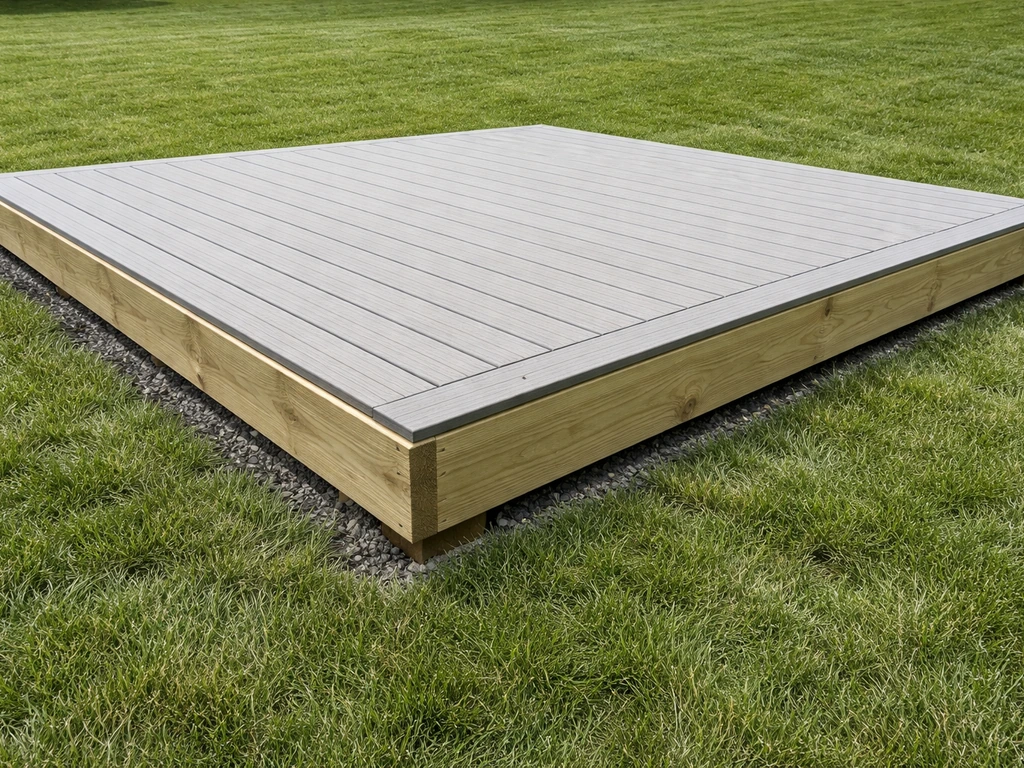
In most cases, you cannot build a traditional patio directly over a leach field. Covering it with concrete, pavers, or any impermeable surface is prohibited under nearly every local health code in the country, and for good reason: it can destroy your septic system and create a serious public health hazard. That said, there are some limited situations where permeable, non-load-bearing solutions might be allowed with proper permits, and there are smart design alternatives that let you build a great outdoor living space nearby without risking your septic system or your wallet. Before you dig a single hole or order materials, here is what you need to know.
Can You Build a Patio Over a Leach Field? Rules and Options

Nolan Lennox
17 Jun 2026
The Direct Answer: When It's Allowed and When It's a Hard No
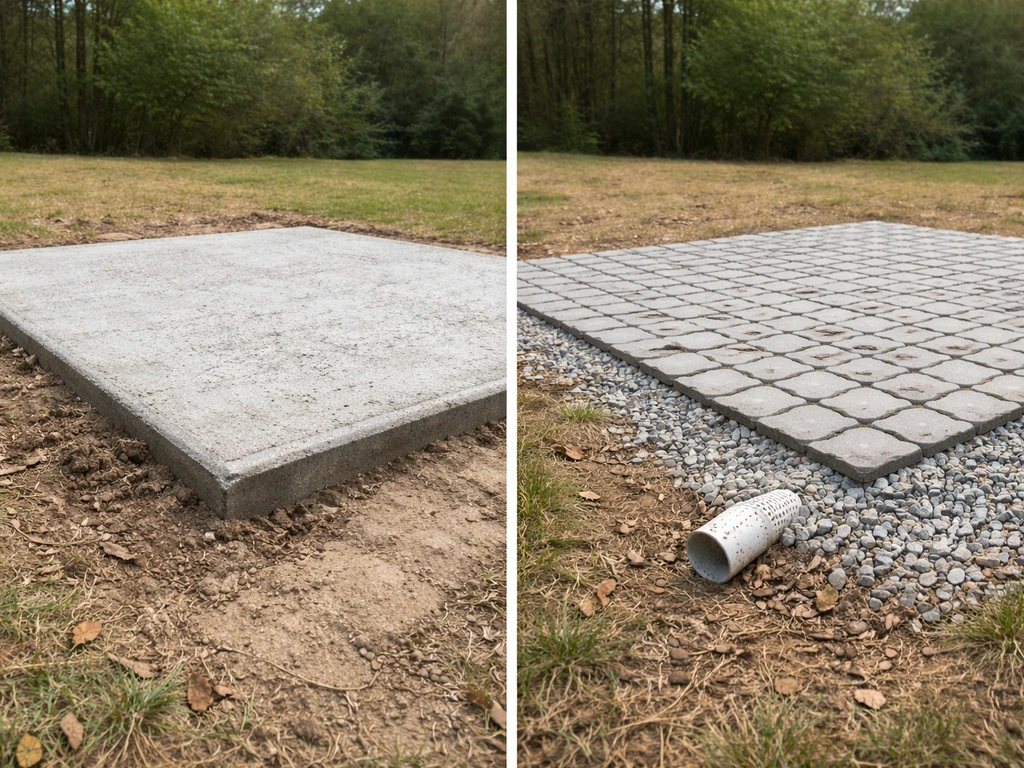
Pouring a concrete slab, laying a mortared patio, or installing any solid impermeable surface over a leach field is almost universally off-limits. Most state and local health departments treat any vehicle traffic, heavy construction, or solid coverage over a drainfield the same way: a violation that can void your septic permit, require expensive system repairs, and potentially result in sewage surfacing in your yard. The EPA makes it plain in their homeowner guidance: do not park or drive on your drainfield. If that's a no for a car, it's certainly a no for a concrete slab.
Where things get slightly more nuanced is with lightweight, permeable options like pea gravel, stepping stones, or a raised deck structure built on posts (not a slab) that keeps load off the soil and preserves air and water movement. If you need a closely related approach for how to patio over grass, start with lightweight, permeable options like pea gravel or stepping stones and keep load off the soil.
Some jurisdictions allow these approaches under specific conditions with a permit. A handful of others allow nothing at all within a defined setback from the leach field boundaries. The bottom line: there is no universal rule that says you can or cannot, because septic regulations are set at the state and local level with no single national standard. Your local health or environmental department is the only authority that can give you a definitive answer for your property.
Why Leach Fields Are So Sensitive
A leach field, also called a drainfield or absorption field, is not just a patch of yard. It is the final treatment stage for your septic system. Wastewater flows from your tank into a network of perforated pipes buried in gravel-filled trenches, and from there it slowly disperses into the surrounding native soil. That soil does the real work: it filters and treats the partially processed effluent as it percolates downward through unsaturated soil layers. The entire system depends on the soil staying loose, biologically active, and able to absorb water at a consistent rate.
This is why construction over a leach field is such a big problem. Heavy loads compact the soil, collapsing the air pockets that allow percolation and biological treatment. Impermeable surfaces like concrete or packed stone block rain and air from reaching the soil, which can saturate the ground underneath and cause the system to back up or fail.
When a drainfield fails, you typically see standing water or soggy spots over the field, slow drains in the house, and eventually sewage surfacing in the yard. The EPA explains that partially treated wastewater relies on filtration through the drainfield and soil, and if the drainfield is overloaded or clogged it can flood and cause sewage to surface in the yard eventually sewage surfacing in your yard.
Repairing or replacing a failed leach field can cost anywhere from $3,000 to $15,000 or more depending on your location and system size. It is one of the most expensive homeowner mistakes you can make, and it is almost entirely preventable.
The Three Big Threats to a Leach Field
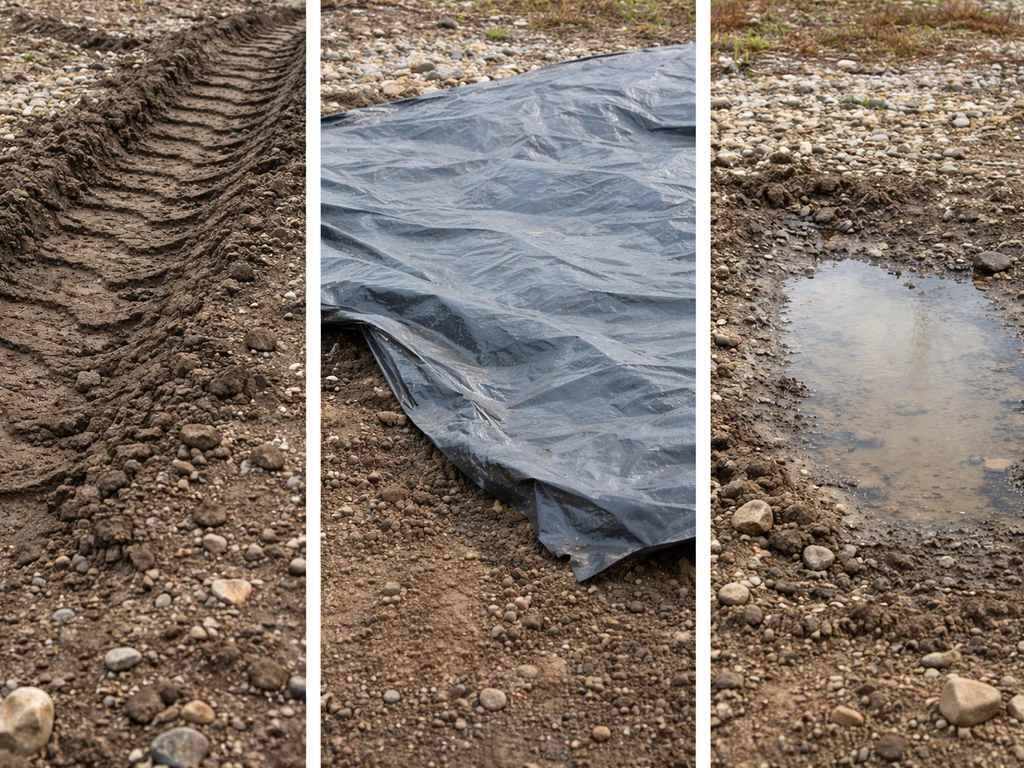
- Soil compaction from heavy loads: compresses the absorption layer and reduces percolation rate, cutting off treatment capacity
- Impermeable coverage: blocks oxygen and natural precipitation cycles that keep soil biologically active and unsaturated
- Root intrusion: tree and large shrub roots will find and grow into the pipe network over time, causing blockages and physical damage
Permits, Codes, and What to Ask Your Local Health Department
Because the EPA defers entirely to state and local authorities on septic system regulations, the first call you need to make is to your local health department or environmental services office, not a contractor, and not a patio builder. This call happens before you spend a dollar on planning. Ask specifically about rules for construction on or near a septic drainfield, including setback distances, surface coverage restrictions, and whether any type of structure is conditionally permitted with a variance or special permit.
Here are the specific questions worth writing down before you call:
- What is the required setback distance from the leach field boundaries for any structure or hardscape?
- Are any surface treatments (gravel, stepping stones, raised deck on posts) allowed over the field itself?
- Is a permit required before any work begins near the leach field, and what does that inspection process look like?
- Do I need to locate and document my leach field boundaries before submitting a permit application?
- Will any construction in this area require a new septic inspection or re-evaluation of the system's capacity?
- What is the penalty or process if someone has already built over a leach field without a permit?
Many health departments also have records on file for your property's original septic permit, which will include a site plan showing where the leach field was installed. Request a copy of this if you do not already have it. It is usually a public record and often free or low cost to obtain. This document is gold when you start planning your patio layout.
Design Constraints and Smarter Alternatives
Once you know where your leach field is and what your local rules allow, the most practical move for most homeowners is to design around the field rather than over it. This is not a compromise. Some of the best patio layouts I have seen use the leach field area as a natural boundary that pushes the patio toward a more attractive or functional spot anyway. Here are the realistic options, from most restrictive to most flexible. If your goal is a temporary patio on grass, focus on solutions that stay permeable and avoid covering the drainfield area.
Option 1: Avoid the Area Entirely
The cleanest solution is to site your patio outside the setback zone entirely. Work with your property's septic site plan to identify the full footprint of the leach field plus the required setback distance on all sides, then design your patio in a completely separate area of the yard. Yes, this might mean the patio is not directly off the back door, but a path or deck extension can bridge that gap without touching the field.
Option 2: Permeable Surfaces with Minimal Load
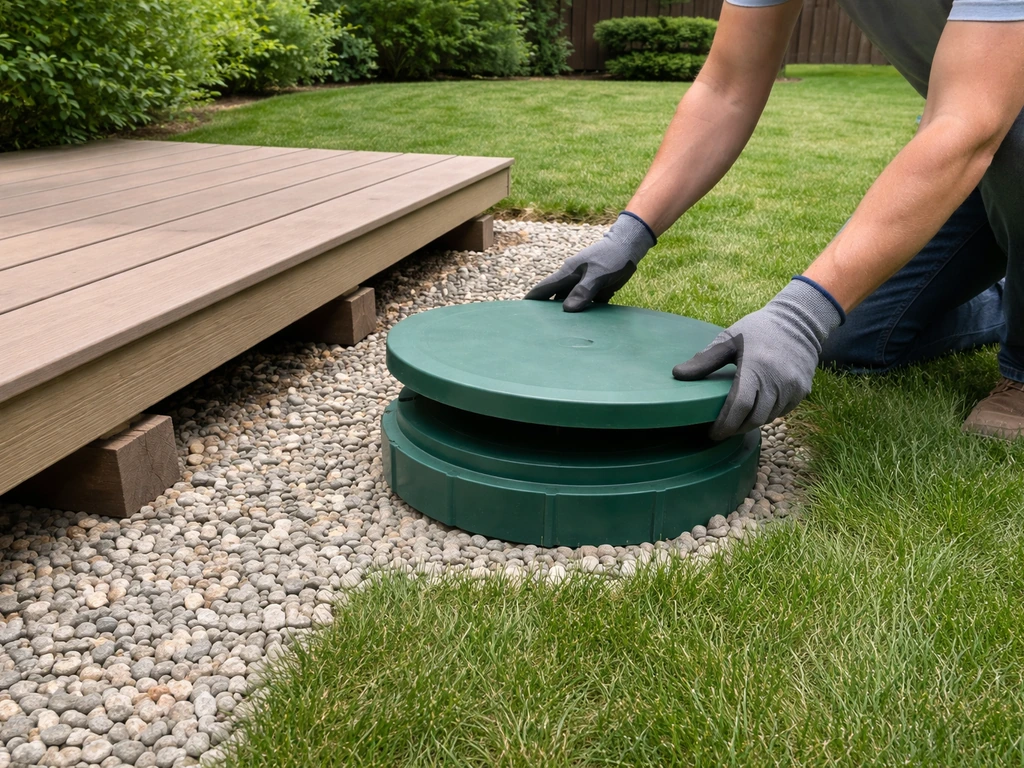
In some jurisdictions, loose permeable materials like pea gravel or stepping stones placed on a thin sand bed may be allowed over or near the field boundary. In many cases, you can make a patio on grass using permeable options like pea gravel or stepping stones instead of solid surfaces. These options do not compact the soil significantly, allow water and air to reach the ground, and can be removed quickly if the system needs service. If your health department allows this approach, it can create a casual seating area or walkway. Just make sure there is no edging or base material that would create an impermeable layer.
Option 3: A Raised Deck on Posts
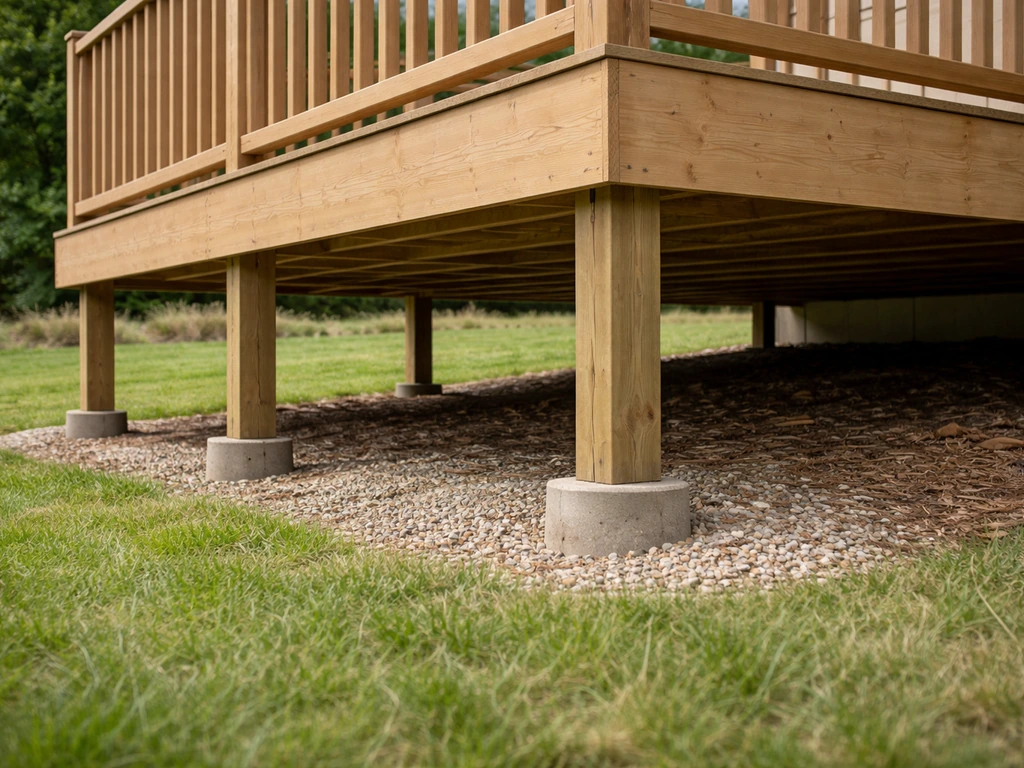
A freestanding raised deck built on posts rather than a slab foundation is the option most likely to get conditional approval in areas that allow any structure over a leach field. The key requirements are usually: posts must be placed at the edges or outside the field boundary (not through the pipe network), the deck surface must allow air circulation underneath, and there must be clear access panels or removable sections so the system can be serviced without demolishing the structure. This approach can look great and function as a real outdoor living space, but it requires careful coordination with both your health department and your septic system layout. Building a raised patio on posts shares some planning principles with other raised-surface builds, though the septic constraints add a layer of complexity that purely grass-based projects do not have.
Option 4: Rerouting or Expanding the System
If you have a compelling reason to use a specific area of your yard for a patio and that area is currently occupied by the leach field, it is sometimes possible to have the system rerouted or expanded to a different area of the property by a licensed septic contractor. This is expensive (typically $5,000 to $20,000 or more), requires permits and inspections, and is only feasible if you have adequate property and suitable soil elsewhere. For most homeowners this is not the right move just to get a patio in a preferred spot, but it is worth knowing the option exists.
DIY Planning Steps Before You Do Anything Else
Good planning here is everything. Rushing into a patio build near a leach field without doing this groundwork first is how homeowners end up with a $10,000 septic repair bill and a patio they have to tear out. Here is how to approach this methodically.
- Locate your leach field: Pull your property's original septic permit records from the health department. This should include a site plan with the tank location, distribution box, and the full dimensions and orientation of the leach field. If records are incomplete or your system is older, you may need to hire a septic inspector or use a probe tool to physically map the pipes.
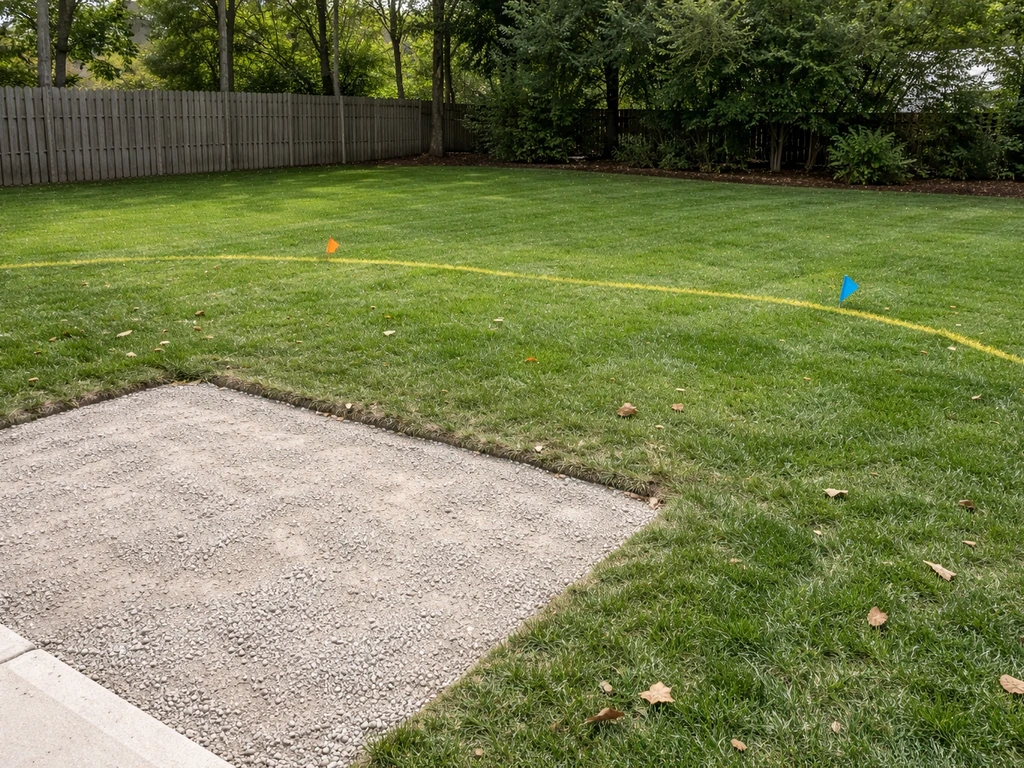
- Mark the boundaries on the ground: Once you have the records, use stakes and string or marking paint to outline the leach field on your actual yard. Add the required setback distance on all sides. Take photos and measurements. Now you can see exactly what area is off-limits.
- Check for underground utilities: Before any digging, call 811 (the national dig-safe hotline in the US) to have utilities marked. Septic pipes are private and will not be marked by 811, which is why locating them via records and inspection is a separate step.
- Assess your soil and grade: Walk the proposed patio area outside the leach field zone. Note the slope, any low spots that pool water, and how the drainage flows relative to the leach field. You do not want patio runoff draining onto or toward the absorption area.
- Document everything: Keep a file with your septic site plan, your health department consultation notes, permit records, and your boundary markings. You will need this if you ever sell the property or if a future contractor needs to work near the system.
Construction Approaches If Your Health Department Says Yes
If your local authority gives you a conditional green light for some type of structure adjacent to or over the leach field, here is how to approach construction responsibly. If you are aiming for a temporary patio-style setup, you should still get a permit or written approval first because even short-term improvements can affect the drainfield. The specific approach depends on whether you are working at the edge of the setback zone, within a buffer area with restrictions, or (in rare cases) over the field itself with a raised deck.
Foundation Strategy
Avoid any continuous concrete footings, poured slabs, or deep excavation near the leach field. If you are building a raised deck with posts, place footings at the outer edges of the permitted area and keep them as shallow as your frost depth and local code allows, steering clear of pipe routes. For permeable patio surfaces just outside the setback, a shallow compacted gravel base (2 to 4 inches) with no landscape fabric or solid underlayment is far better than a thick road base that blocks drainage.
Material Choices
| Material | Permeability | Load Impact | Repair Access | Best Use Near Leach Field |
|---|---|---|---|---|
| Concrete slab | None | High | Very difficult | Not recommended near or over field |
| Clay or concrete pavers (mortared) | None | Moderate-High | Difficult | Not recommended near field |
| Dry-laid pavers on sand/gravel | Moderate | Low-Moderate | Good | Acceptable outside setback zone |
| Pea gravel or crushed stone | High | Very low | Excellent | Best option if any coverage is permitted |
| Stepping stones on soil/sand | High | Minimal | Excellent | Good for light paths near field boundary |
| Raised wood/composite deck on posts | High (air gap) | Load on posts only | Good with access panels | Best structural option if conditionally permitted |
Drainage Planning
Whatever you build, grade the patio surface and surrounding ground so that water flows away from the leach field, not toward it. The absorption area already receives a significant water load from the septic system itself. Adding patio runoff on top of that can push the field into a saturated, failing state faster than almost anything else.
If you are wondering whether you can build a patio on top of grass over a drainfield, the key issues are load, permeability, and drainage direction. A 1 to 2 percent slope away from the field is the minimum target. If your property grades naturally toward the leach field, a simple French drain or swale on the uphill side of the patio can redirect surface water before it reaches the absorption area.
Keeping Your System Healthy Long-Term
Even if your patio project goes perfectly and meets all the local requirements, the leach field needs ongoing respect. Septic systems are not a set-it-and-forget-it part of your home. Here is what to keep in mind for the long haul.
Protect Access for Future Repairs
If a raised deck or any structure is conditionally permitted over or near the leach field, design in real, usable access from day one. This means removable deck boards over pipe inspection points, a section of the deck that can be lifted without demolition, and clear documentation of exactly where the pipes and distribution box are located underneath. Septic contractors need to get heavy equipment and tools into the field when repairs are needed. A deck that requires a full tear-down to access the system will either cost you a fortune in demo fees or tempt a contractor to skip proper inspection, neither of which is a good outcome.
Landscaping Rules Around the Field
The blank" rel="noopener noreferrer">EPA's own landscaping guidance for septic systems is specific: keep the drainfield area covered with grass or shallow-rooted ground cover, and plant any trees or large shrubs at the appropriate distance from the field boundaries so roots cannot reach the pipes. Deep-rooted plants can invade and clog the pipe network over years, and this damage is not always visible until the system backs up. If your patio design involves planting around the leach field edges, stick to turf grass, creeping thyme, or other shallow-rooted options. No ornamental trees, no vegetable gardens (which also create a food safety concern from effluent), and no raised garden beds that change the soil grade over the field.
Watch for Early Warning Signs
After any work near the leach field, including patios built outside the setback, check the field area regularly during wet weather. Damp spots, soft ground, unusually lush green grass in a defined patch, or any odor near the field are all signs that the system is under stress or actively failing. Catching this early can mean the difference between a simple pump-out or adjustment and a full field replacement. If you notice any of these signs, call a licensed septic service before the problem gets worse.
The Long-Term Risk of Doing It Wrong
Building over a leach field without permits or against local code does not just risk your septic system. It can create liability issues when you sell the property, since most home sales require a septic inspection and any unpermitted work near the system will likely be flagged. It can also result in fines from your local health department if the violation is discovered.
The cost of doing this right, including the health department consultation, a proper permit if required, and a design that respects setbacks, is small compared to the cost of getting it wrong. Start with the phone call to your local authority, design around the leach field wherever possible, and build something you can be proud of without risking the one system in your house that is genuinely irreplaceable.
FAQ
What kind of patio surface is most likely to be allowed near a leach field if I get a permit?
Loose, permeable materials are the best candidates, such as pea gravel or stepping stones, as long as there is no landscape fabric, impermeable underlayment, or edging that traps water. Even then, approval is often limited to specific buffer zones and may require a shallow base depth you must follow exactly.
Can I pour a thin concrete overlay, like a mini slab or a “paver base” concrete bed, instead of a full slab?
Usually no. Many health codes treat any solid concrete or mortar layer over the absorption area as impermeable coverage, even if it is thin. If your design needs pavers, ask whether you can use a permeable sand bed over approved soil depth, rather than any cementitious layer.
Are gravel patios safe if they’re placed only on top of grass, without digging?
Often they still are not automatically safe. Even if you do not excavate, you can compact the soil with construction traffic, and you may need to confirm the exact spot is outside the setback and does not include any impermeable edging. You should also verify that your plan does not require a base that blocks water movement.
What setback distance should I use if I do not know the leach field boundaries?
Do not guess. Request your original septic permit site plan and determine the leach field footprint plus the required setback on all sides. If you cannot locate the boundaries, ask the health department what level of survey or as-built verification they require before you design.
If I build a raised deck, do the deck footings count as “construction over” the leach field?
Yes, footings can still be regulated because they can compact soil and require excavation. The typical approach is to place posts and footings at the edges of the permitted area, outside the pipe network, with shallow foundations allowed by local code. You will still need written approval identifying where the posts may go.
Can I drive a wheelbarrow or compact equipment over the leach field during patio work?
Most likely no. Equipment traffic and soil compaction can damage the absorption performance even if you do not place impermeable materials. Ask the inspector what access route is allowed and whether they require you to keep equipment completely out of the drainfield zone.
How do I keep patio runoff from flowing toward the leach field when my yard slopes down to it?
You need a runoff strategy that redirects surface water away before it reaches the absorption area. A common solution is a swale or French drain on the uphill side, but the exact placement must respect setbacks and approved drainage patterns. Also plan the patio slope (minimum 1 to 2 percent away from the field) so water does not pond at the edges.
Do roots from nearby landscaping still matter if I only build around the boundary?
Yes. Deep-rooted plants can reach and damage the distribution pipe network over time, causing failures that are not obvious at first. Use shallow-rooted ground cover or turf near the boundary, and keep trees and large shrubs at the distances required by your local septic guidance.
What should I design for so maintenance access is easy if the deck or patio is approved?
Build in service access from day one. That usually means removable deck sections aligned with inspection points, clear documentation of pipe and distribution box locations, and enough clearance for the septic contractor’s equipment. If access requires demolition each time, it increases cost and risk.
Can I reroute or expand my septic system to free up the spot for a patio?
It is possible, but it is a permitted, expensive project, and it depends on soil suitability and property layout. If you consider it, ask the septic contractor and permitting office whether there is a practical alternative absorption area and how the new system will affect future setback and maintenance zones.
What are warning signs that the leach field is being harmed during or after construction?
Watch for soft ground, damp spots, unusually lush grass in a defined patch, slow household drains, or odors near the field, especially after wet weather. If you see any of these, contact a licensed septic professional promptly, because early issues can sometimes be resolved before a full field replacement is necessary.
Will unpermitted work over or near a leach field cause problems when I sell the house?
Often, yes. Most home sales involve septic inspection, and health or environmental departments may require disclosure of violations or unpermitted work near the system. If the work is flagged, you could face repair costs or restrictions, so getting written approval and keeping permit documents is important.
Next Article
How to Build a Raised Patio on Grass: Step by Step DIY
Step-by-step DIY guide to build a raised patio on grass, from layout and turf prep to base, drainage, framing, and level